Employee Trust vs Compliance, What Your Team's Silence Is Really Telling You
Does your team agree to everything you say?
That happened to Antoine too.
He found out on a Tuesday afternoon. Three of his senior directors gone within six weeks of each other. Not fired, not poached with money he could not match. They walked because none of them believed he would notice, and they were right. He had not noticed a thing, because for two years straight, every single one of them had nodded in every meeting he ran.
I want you to sit with that for a second, because most of you watching this are doing exactly what Antoine did, and calling it leadership.
Here is the claim that is going to make some of you angry. A team that never disagrees with you does not respect you, it is managing you. There is a difference between a room that trusts you enough to push back and a room that has simply learned it is safer to nod, smile, and wait for the meeting to end.
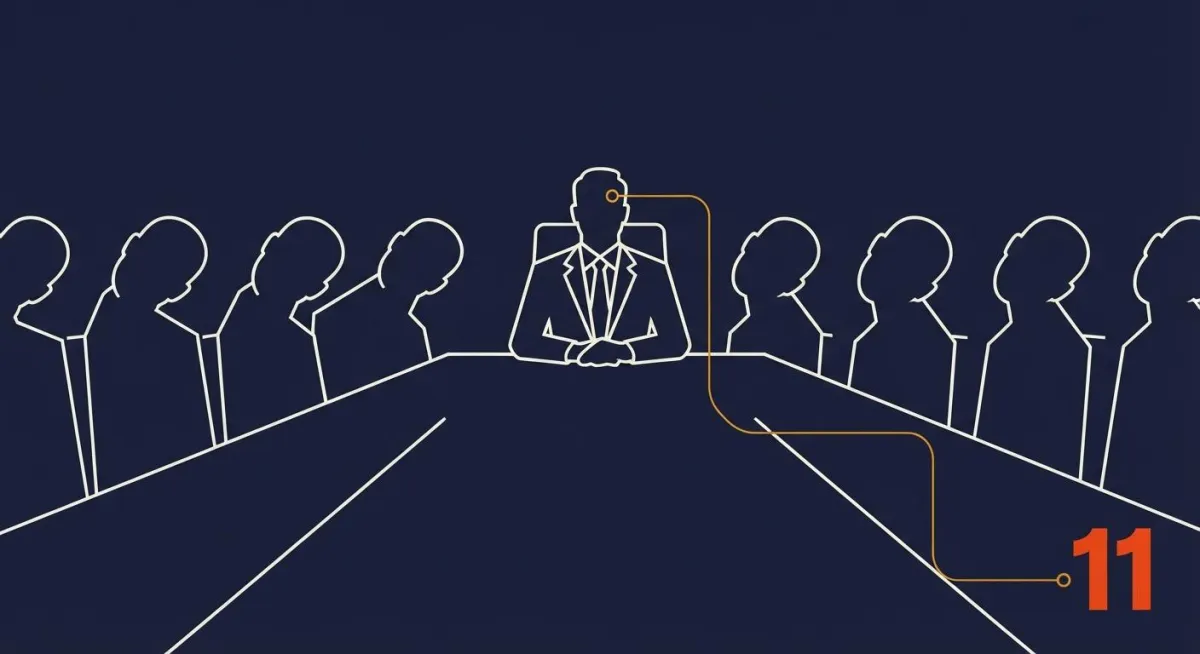
You know this meeting, you have run it, you have sat in it. It has a rhythm almost musical to it. Someone presents a plan nobody actually likes. A pause happens exactly where the objection is supposed to happen. Instead, three heads nod in sequence like dominoes, someone says great, moving on, and forty minutes later everyone leaves feeling productive and nothing risky was ever actually said out loud. Give that room a decade and you get exactly what Antoine got, three resignations he never saw coming.
Here is the mechanism, and it is colder and simpler than anyone wants it to be. When someone in a meeting disagrees with the person who controls their paycheck, their brain runs a threat calculation before it runs a logic calculation. Status risk, social punishment risk, career risk, all of it processed by the amygdala in a fraction of a second, long before the prefrontal cortex gets a chance to build an actual argument. Nodding is not consent. Nodding is a nervous system finding the fastest exit from a threat. Silence is not agreement. Silence is the cheapest form of protection a brain has available to it.
Here is what makes this expensive instead of just uncomfortable. Cortisol does not only keep someone quiet in the meeting, it measurably suppresses the exact part of the brain, the prefrontal cortex, that generates original ideas and catches other people's mistakes before they become expensive ones. A compliant team is not simply a silent team, it is a team that has become measurably worse at its actual job, because a brain cannot be creative and afraid of you at the same time. Every executive who complains their team never brings them good ideas anymore built that exact outcome, meeting by meeting, one polite nod at a time.
This compounds fast. A team that has learned silence is safer stops flagging small problems early, and small problems left alone quietly turn into the kind of problems that cost you a client, a director, or both, in the same quarter.
So when Antoine looked back at two years of meetings where nobody ever pushed back on a single decision, he was not looking at a loyal team. He was looking at a room full of nervous systems doing exactly what nervous systems are built to do under perceived threat, protect themselves first, and give him whatever answer ended the discomfort fastest.
Six months after the third resignation, Antoine finally sat down with one of them for an honest conversation, off the record, no one else in the room. He asked what he had done wrong. The answer took him apart. She told him that two years earlier she had flagged a serious problem with a client contract in a leadership meeting, been told thank you for raising that, we will look into it, and then watched nothing change and nobody follow up. After that, she said, she stopped raising anything, because raising things clearly did not matter, and it only cost her the discomfort of being ignored twice instead of once.
Antoine is not a bad leader. He is a hardworking man who has spent fifteen years building that company, and he mistook the absence of conflict for the presence of trust, because that is what almost every executive on this planet has been trained to do.
The same circuit runs your client list, and this is where most of you are quietly bleeding revenue without noticing. A client who stays with you because switching contracts is annoying and the paperwork is a headache is not a loyal client, that client is one better offer away from gone, and you will not see it coming, exactly like Antoine did not see his directors leaving. A client who stays because they respect how you operate, because they trust what you tell them even when it is not what they want to hear, that client renews without a negotiation and sends you three more. Same brain circuit, same 3R mechanism, whether it is sitting across from your team or across from your best account.
One of my own clients told me something similar about his best account, a client who has renewed for six years running without ever once negotiating the price down. When I asked him why, he said it was simple, that client trusts him more than they trust their own instinct to shop around, and that trust was built on him telling them uncomfortable truths at least three times a year instead of only good news.
Real trust needs a completely different chemical signature. Oxytocin, not cortisol. And oxytocin only shows up when a brain has actual evidence that disagreement will not be punished. Not a slide that says our door is always open, evidence, repeated, over time. Which makes the way you find out if your team trusts you brutally simple. Count how many times someone told you that you were wrong in the last month. If that number is zero, you do not have a loyal team, you have a compliant one, and compliant teams leave the moment a better offer shows up, because there was never anything holding them there except habit and fear.
Antoine rebuilt this the hard way. He started closing every leadership meeting with one question. What am I missing. Not what do you think, because people have learned to perform an answer to what do you think. What am I missing forces someone to actually produce a piece of information instead of a piece of theatre. It felt forced the first few times, artificial even, exactly the kind of thing a consultant tells you to do, and he kept doing it anyway. The first three times he asked it, the room just stared at him like he had grown a second head. It took months before anyone answered honestly. The first honest answer he got was about a client contract he had personally mishandled, and instead of getting defensive in front of the room, he said thank you, out loud, and moved on to fixing it. That single moment did more for his reputation with that team than three years of open door policy speeches ever did.
The two directors who stayed have since told him that first honest exchange changed how the whole room breathes in meetings. Nobody has quietly checked out since, and lately, someone usually finds the problem before the client does.
This is not a soft skills problem. This is a neuroscience problem with a business consequence attached to it, and it is exactly what we work on inside the 3R system, Revenue, Reputation, Relationships, because your brain does not separate the boardroom from the people who love you at home. It is the same circuit deciding whether your team trusts you, whether your clients stay, and whether the people closest to you actually believe you when you tell them you are proud of what you built. Ask any of them the same question you should be asking your team, when was the last time they told you that you were wrong, and watch how long it takes them to answer.
If you cannot remember the last time someone inside your business told you that you were wrong, stop watching this as content and start treating it as a diagnosis. Get the Primal Pitch Framework and start closing the gap between a room that agrees with you and a room that actually trusts you. Fix the mechanism, not the symptom.
CTA
Get the Primal Pitch Framework, home.happy-brains.com/primal-pitch