How Your Brain Decides Who Gets Remembered
Your brain makes this call in eleven seconds, without asking your permission. Here's how it actually works, and what it's quietly costing you.
Do you know how your brain decided whether to trust the last stranger you met? Not during the handshake, and not during the small talk. It decided in the first eleven seconds, before either of you had said a single word that actually mattered, and neither of you knew it was happening.
Here's the part nobody tells you, and it isn't a metaphor, it's biology. The human brain runs a full assessment of you, threat, trust, status, and likability, in the first eleven seconds of any interaction, and it does this before your conscious mind ever gets a vote. The other person's medial prefrontal cortex files you into a folder, worth remembering or background noise, and once that folder closes, it almost never reopens. Walk into any room today, a boardroom, a networking mixer, a client pitch, a fundraising dinner, and that same filing system is already running before you've finished your first full sentence. You can spend the next two hours being brilliant, quoting numbers, closing every objection perfectly, and none of it changes the verdict, because the verdict already happened, in the first eleven seconds, before you even sat down. That's not an opinion about how people should behave, that's just what the brain does, to you, to your buyer, to everyone in every room, all day, every day, whether anyone agrees to it or not.
Now sit with what that's actually costing you, because this is not an abstract idea, this is your Tuesday. It's the client who was polite in the meeting and never called back. It's the referral that went to the competitor who talks less, knows less, and somehow got remembered while you got filed under fine. It's the fact that you've built something genuinely good, and you're still not the name people say first when they're describing who they trust in your industry. It's standing at the edge of a networking room holding a drink you're not drinking, watching someone with half your experience get introduced around the room like he owns it, while you get a nod and a name tag. It's the employee meetings where people nod along and agree with everything you say, and you can't tell anymore if they trust you or if they're just managing you, and that's a room too, the eleven seconds run there as well. You want a parent, a partner, an old friend, an employee, someone, anyone whose opinion actually matters to you, to finally say they're proud of you, and mean it in a way you can feel, not a way you have to fish for.
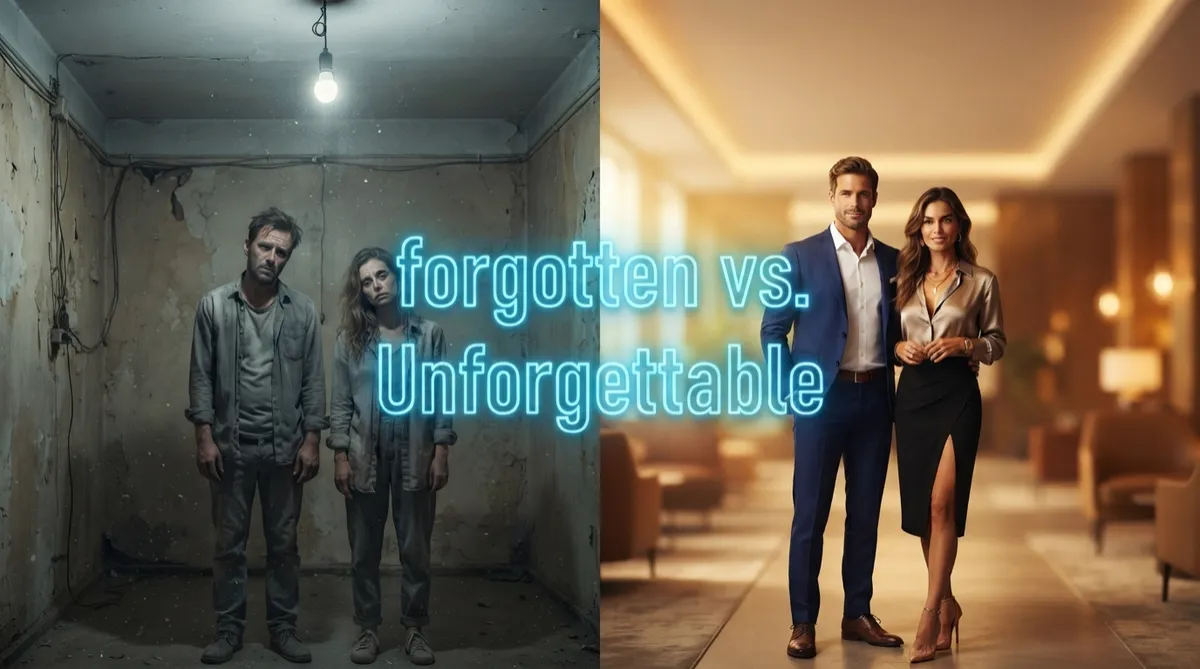
You want to walk into a room full of people who could hire you, fund you, or follow you, and be the one they're still talking about after you've left, not the reliable one, not the competent one, the unforgettable one. And somewhere underneath all of that sits a fear you don't say out loud to anyone, that you're doing everything right and it still isn't landing, and you genuinely don't know why.
Here's the belief that's keeping you stuck, and you've probably said a version of it to yourself more than once. People in your line of business make rational decisions. Your buyers, your board, your industry, they're not swayed by feelings, they weigh facts, they compare numbers on a spreadsheet, they choose the best option. It sounds responsible. It sounds like the kind of thing a serious person says in a serious industry. It is also completely wrong, and the wrongness is costing you money and standing right now, today, in rooms you've already walked out of.
Two candidates with identical numbers on paper, same experience, same pricing, same pitch deck almost word for word. One gets the deal, one gets a polite no thank you. That gap isn't explained by the spreadsheet, it's explained by eleven seconds nobody in that room was even consciously aware of. The brain does not check your industry before it runs its filing system, and it does not care how serious you think your buyers are. It ran the exact same threat and status assessment on myself, competition level skydiver in France, the first man to fly a wingsuit over the North Pole at ten thousand feet, the same brain that has jumped out of more planes than most people have taken flights. You'd think a brain trained to override fear at terminal velocity would be immune to something as small as a first impression in a conference room. It isn't. The nervous system doesn't grade on courage, it grades on threat, status, and likability, and it runs that grade on every single person walking into every single room, accountants and engineers and CFOs included, whether they like the idea of it or not. If it happens to aman who jumps out of planes for sport, it is absolutely happening to you and to everyone sitting across the table from you, every single time. So the next time you catch yourself thinking your buyer is different, more analytical, more immune to first impressions than the rest, remember that the brain in front of you didn't get a memo excusing it from eleven seconds, no brain ever has.
So here's the permission you've been waiting for, because you've earned the right to hear it said plainly instead of dressed up.
You are allowed to want this. You are allowed to want your name to carry weight in a room you're not even in. You are allowed to want the recognition, the referrals, the reputation, without wrapping it in language about service or impact to make it sound nobler than it is. Wanting to be remembered is not vanity, it's the most human thing in that entire boardroom, and pretending you don't want it is exactly what's keeping it out of reach. You were always allowed to want this. Selfish on purpose isn't an insult, it's the operating instructions, and the sooner you stop apologizing for wanting your name to matter, the sooner it starts to.
Wanting it isn't the problem. Not knowing the mechanism is the problem.
A client of ours named Alexandre Basson runs marketing and business development for a group called Precision Global. Five years ago he rebuilt the press ads, the booth at the trade shows, the website, all of it, on exactly what's laid out here, and people in his own industry told him nobody had done anything like it before. His LinkedIn audience grew sevenfold. His visibility changed. His leads changed. Not because the product changed underneath him, because the eleven seconds people spent forming an opinion of him changed completely, and once that changed, everything downstream of it changed with it. He didn't rebrand, he didn't discount, he didn't work longer hours, he changed what happened in the first eleven seconds someone encountered him, and the rest of the business simply caught up to that.
That's the mechanism, and it has a name. It's called Make Me Great, and it's a PhD in Artificial Intelligence's answer to a very old problem, how do you install the exact circuit that governs whether a room trusts you, remembers you, and talks about you once you've left it. It isn't a personality trick and it isn't charisma coaching, and it isn't about learning to fake warmth in an elevator for four minutes until the door opens. It's a toolbox of Ethical Persuasion power tools, built directly on how the brain actually files people in those first eleven seconds, and once it's installed, becoming unforgettable stops being something you hope happens in a room and becomes something you walk in already carrying, before you've said a word.
That's the mechanism this entire piece is built on, and if reading about it is starting to feel thinner than actually installing it, register for The 11 Second Verdict here. It's free, it's live, and it's October 7th.
And reputation is only one third of what's actually happening here, which is exactly why one short session isn't enough to cover it properly, and why we're not trying to. The same eleven seconds deciding whether a room remembers you is also deciding whether that room writes you a check, which is a conversation about revenue, and whether the people closest to you actually feel chosen by you at the end of a long day, which is a conversation about your relationships. Clients ask us, almost every single session, quietly, almost embarrassed to be asking, can I use this with my partner too. That question tells you everything you need to know, this was never just a boardroom tool, it's the same circuit running in every room you'll ever walk into, including the one at home, the one with the person waiting up for you.
All three of those, revenue, reputation, and relationships, get covered live, in full, in one sitting, on October 7th, in one free session, no book to buy first, no course to sit through, called The 11 Second Verdict. Six PM in Brussels, six PM in Paris, noon in Miami, nine AM in Los Angeles. One hour, no charge, and you'll leave it with the exact mechanism behind everything laid out above, not a summary of it, not a taste of it, the actual mechanism.
You can keep walking into rooms and hoping this time it lands differently, or you can find out, in one hour, exactly what that room has been deciding about you this entire time, and exactly what to do about it. Register for The 11 Second Verdict ,
October 7th. Six PM in Brussels and Paris, noon in Miami, nine in the morning in Los Angeles.
Book your seat here : https://home.happy-brains.com/11-seconds-verdict