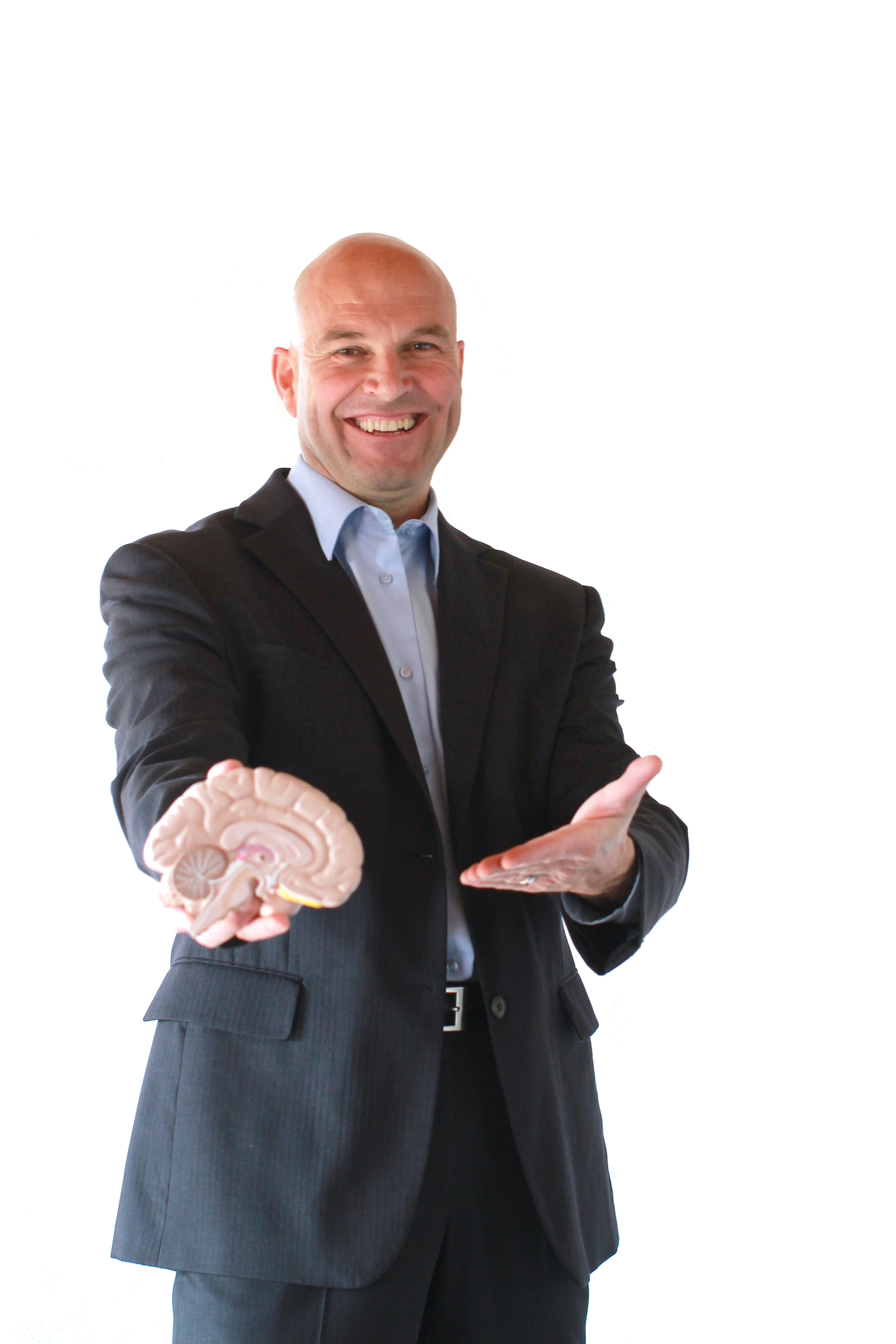
Why the Most Qualified Person in the Room Keeps Losing the Deal (And the Neuroscience That Fixes It)
You are not losing because your product is inferior. You are not losing because your price is wrong. You are not losing because your competitor has better marketing.
You are losing in the first 11 seconds. Before your first slide. Before your first number. Before you have said a single word that matters.
This is not a motivational claim. It is neuroscience. And once you understand it, you will never pitch the old way again.
The 3 Brain Scans:
Every human brain runs three unconscious scans the moment a new person enters the room. These scans originate in the amygdala and limbic system — the primal brain — and they complete before the prefrontal cortex has even begun processing the rational content of what is being said.
Scan 1: Threat or ally? The primal brain's primary function is survival. It asks, instantly and unconsciously: is this person safe to engage with? Stress signals, closed posture, rushed delivery — all register as threat. The brain closes. Nothing you say after that point lands with full impact.
Scan 2: High status or low? The brain is a hierarchy machine. It is continuously assessing: is this person worth following? Not in a cynical way — this is deep evolutionary wiring. Status signals include eye contact patterns, vocal tonality, the pace of movement, and the first words chosen. These cues are processed in under 300 milliseconds.
Scan 3: Relevant to my survival or goals? The third scan determines whether to allocate cognitive resources to this interaction. If the answer is no — if the opening does not immediately connect to a pain, a risk, or a desire the brain already holds — the mind begins to wander. Your slides become visual noise.
What Happens When You Fail a Scan (200 words):
Here is what most executives and founders do not understand about their own pitches: the rational brain does not engage until the primal brain clears the person.
This means your ROI analysis, your competitive differentiation, your case studies — all of the rational content you have spent weeks preparing — is processed through a filter that the primal brain set in the first 11 seconds.
If the primal brain filed you under 'ordinary' or 'threat,' the rational brain spends the rest of the meeting looking for reasons to confirm that assessment. Your strongest arguments become weaknesses. Your most compelling data becomes something to question.
Recovery from a failed primal scan is nearly impossible in a single meeting. I have watched it happen hundreds of times in 20 years working inside IBM, HP, AOL, Bosch, and Steelcase.
The Primal Pitch Framework (400 words):
After a decade of studying this — and after watching the most qualified people in some of the world's most competitive boardrooms be consistently overlooked — I built a 7-step structure that speaks to the brain in the correct sequence.
Step 1 — The Pattern Interrupt: The primal brain is a prediction machine. When you open the way every other pitcher opens — name, company, agenda — the brain has already predicted the rest of the meeting and begun to disengage. The first 7 seconds must break the expected pattern. A counterintuitive statement. A direct challenge to a belief. Anything that forces the brain to re-engage and recalibrate.
Step 2 — The Pain Spike: Before the primal brain engages with any solution, it needs to feel the problem — specifically, in the brain's own language. Vague pain produces vague engagement. Name the exact, felt consequence. Connect it to a downstream cost the brain hasn't consciously linked yet.
Step 3 — The Authority Anchor: Now — and only now — you establish who you are and why you are credible. In 2–3 sentences. Not a biography. A precision credibility statement that closes the authority scan.
Step 4 — The Vision Bridge: Paint the specific, measurable future state. Not 'improved performance.' €400K in new contracts. Zero attrition. The first keynote invitation in 18 months. The primal brain responds to futures it can feel, not promises it can only think about.
Step 5 — The Proof Stack: Now the rational brain has been primed. Data, case studies, and results land with full force. Not because the numbers changed — because the brain receiving them has changed.
Step 6 — The Objection Pre-empt: Surface the two objections that are forming before they are voiced. Answering an objection the prospect hasn't raised yet signals deep competence and builds trust faster than any counter-argument.
Step 7 — The Primal Close: A specific next step with a specific time anchor. Not 'let's stay in touch.' Not 'reach out when you're ready.' A named action, a named date, a named outcome.
The Primal Pitch Framework is the most complete version of this system I have built. It walks through all 7 steps in detail, with worked examples for sales pitches, investor meetings, board presentations, and keynote talks.
It is free. No course to buy. No webinar to register for. Just 22 pages that will change how you communicate in every high-stakes room you walk into for the rest of your career.
→ Download the Primal Pitch Framework: https://home.happy-brains.com/primal-pitch
If this has been useful — share it with someone who is brilliant, prepared, and tired of being overlooked. They'll thank you for it.