Your Father Tells the Neighbour You Do Something With Companies
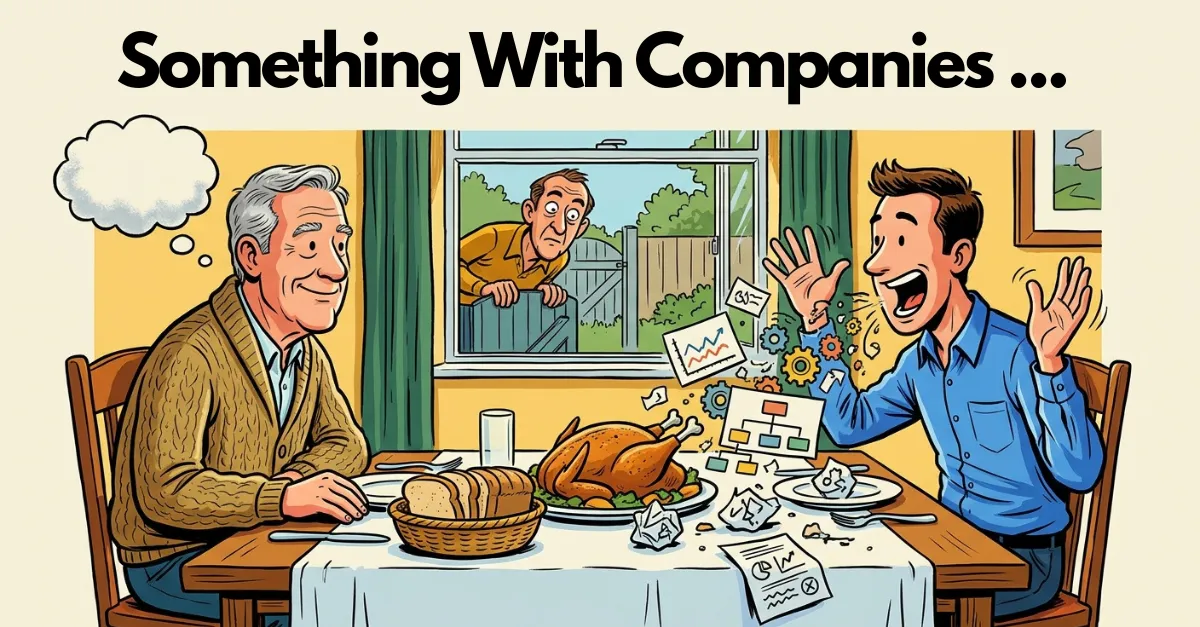
Sunday lunch. Your father asks what you actually do these days.
You explain for ninety seconds. Clients, process, results, a word about the team. He nods warmly. He passes the bread. A week later, at the neighbour's gate, he tells the man next door that you do something with companies.
Something with companies. You have a team, a track record and a bank balance, and the headline of your working life, as told by the person who raised you, is something with companies.
Here is the brain fact behind that. Researchers found that reading words with strong smell associations, like cinnamon, activates the brain's smell areas. A word can switch on a scene inside the listener's head. Ninety seconds of explanation switches on nothing. Your father was not distracted. Your father had nothing to picture.
Now the part nobody says at the table. You did not need him to understand every detail. You wanted him to be able to say it, and underneath that, quieter, you wanted to hear that he is proud, in words he chose himself. That is a subconscious frustration, the thing you feel and would never say out loud.
You are allowed to want that.
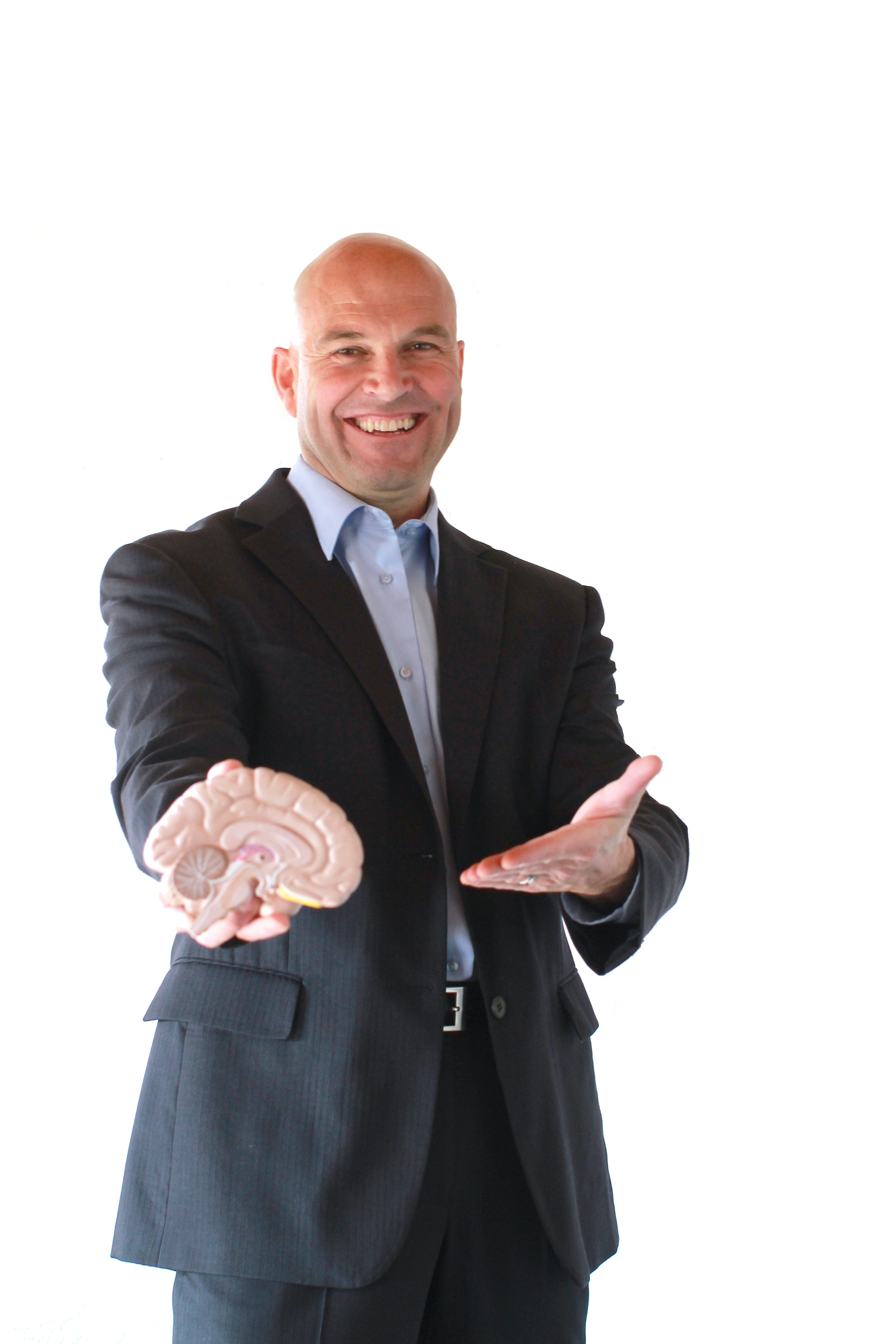
Thomas here, the Brain Guy. PhD in artificial neural networks, certified neuromarketing instructor, and a teacher of executives worldwide on how to speak to the part of the brain that decides first. Today, one scene, one sentence, and three rooms where that sentence earns its keep. The Sunday lunch, the meeting room, and the dinner table with your partner's friends. Stay for all three, because the second one is where the money is.
Let's be blunt. Your explanation is the problem.
When you explain for ninety seconds, you hand the listener a pile. Services, process, a result, another result, a word about your values. Brains do not carry piles. In my method, memory is emotion multiplied by repetition. Your pile contains no emotion, and you delivered it once. Zero times one is still zero.
Antonio Damasio, a neurologist, studied patients whose emotion circuits were damaged. They could analyse every pro and every con, and they still could not decide. Take the feeling out and the decision does not get better, it disappears. Feeling is not decoration. It is how a thing gets picked.
So when your father says something with companies, that is not a failure of love. It is exactly what a brain keeps from a pile.
Now the controversial bit. Most business owners respond to this by explaining better. A sharper pitch, a nicer deck, a proper positioning statement. More words around the same blank. Stop. The fix is not better explaining. The fix is less, and it fits in one breath.
And it is not only your father. Your buyer, your team, your partner and your oldest friends all run the same brain. Each of them can tell you that you are good at what you do and still be unable to repeat it. That is a quiet kind of invisible, and it is expensive.
Hand them one sentence. Not a speech. One sentence, three parts.
Part one, who you help. A person, not a sector. Part two, what changes for them, in the words they would use. Part three, one detail anybody can picture, with a sound, a smell, a place or a time of day.
Here is the difference. Version one: we provide strategic solutions that improve business performance. Your father will pass the bread. Version two: small hotel owners come to me with empty weekend rooms, and a month later the phone is already ringing on Monday morning. Who, what changes, and a detail you can hear.
The detail does the heavy lifting. When I rewrote my motorcycle tour site around feeling instead of distances and hotels, inquiries went from 5 to 20 a week. Feeling beats distances.
Pick your detail from a real moment, a client you watched, a room you stood in. Your own story beats an invented one, because your voice, your face and your body carry the emotion.
Then make it small enough to say with your mouth full. Seven to eleven seconds, no more. Unforgettable in 11 seconds is the promise of my method, not a lab result, and a sentence that takes two minutes to say has already missed it.
Room one, the Sunday lunch, your Reputation. Your father is not the only one. Your team nods in the meeting and then does things its own way, and often nobody can say in one breath what the company is for. A nodding team is not a following team. Give them the sentence and it walks into rooms you will never enter, repeated to customers, to candidates, to their own families.
Room two, the meeting room, your Revenue. Your buyer loved the call. Now he has to explain you to a budget holder who was not there. If he has no sentence, he has a risk, and nobody wants to be the person who recommended something they cannot describe. That is his subconscious frustration, looking wrong in front of his boss. Hand him a sentence and you hand him a safe recommendation. Referrals work the same way. If nobody can say what you do, nobody can send you anyone. A referral is just your sentence, repeated by somebody else.
Room three, the dinner table, your Relationships. Dinner with your partner's friends. Somebody asks her, so what does he do exactly? She pauses, smiles, and says he has a company. You are two chairs away, close enough to hear it.
That pause is not her fault. Nobody gave her a sentence. And what you wanted from that table was not information, it was to hear her say it with a little pride, in her own words, without being asked twice. You are allowed to want that too.
The same goes for the friend who could introduce you to the right person at the right dinner. Nobody introduces someone they cannot describe in one breath. Everyone who loves you, or could vouch for you, is walking around with a blank where your sentence should be.
A sentence is a seed. Repetition is the water. In my method, memory is emotion multiplied by repetition, so you need both halves. The emotion comes from the detail. The repetition is homework.
Next Sunday, do not explain. Say the sentence once, exactly as you wrote it. Then stop talking, and wait four real seconds. Four seconds at a lunch table feels like a week. Let him fill it.
Then ask him to say it back to you in his own words, and do not correct him. His words are the whole point. A sentence a person chose to say is a sentence a person owns, and people tend to carry what they own with a little pride attached.
Then repeat the same sentence at the next three lunches. Boring? To you, yes. Repetition is boring for the speaker and brand new for everyone else. Ten rooms, ten tellings, same sentence.
Before you say it, no, this is not manipulation. Ethical persuasion drives a decision the other person is willing to make, because it gives both sides a win. You get a father who can say it. He gets something proud to say. The only loser is the neighbour, who now hears it every week.
So be selfish on purpose. Want the pride, want the referral, want your partner to say it across the table. It's not helping others that makes you happy, it's being happy that lets you help others.
Here is what to do before next Sunday. Take the free Brain Trigger diagnostic, here : https://braintrigger.happy-brains.com.
Twelve situations, about three minutes. It shows which of your three ladders, Revenue, Reputation or Relationships, is the weakest, and gives you a first next move free. After the lunch, speak for about a minute about what he said back, and Brain Trigger gives you the next move. Yes, a language model is involved. No camera, no emotion reading. Be Great!Be Great!